
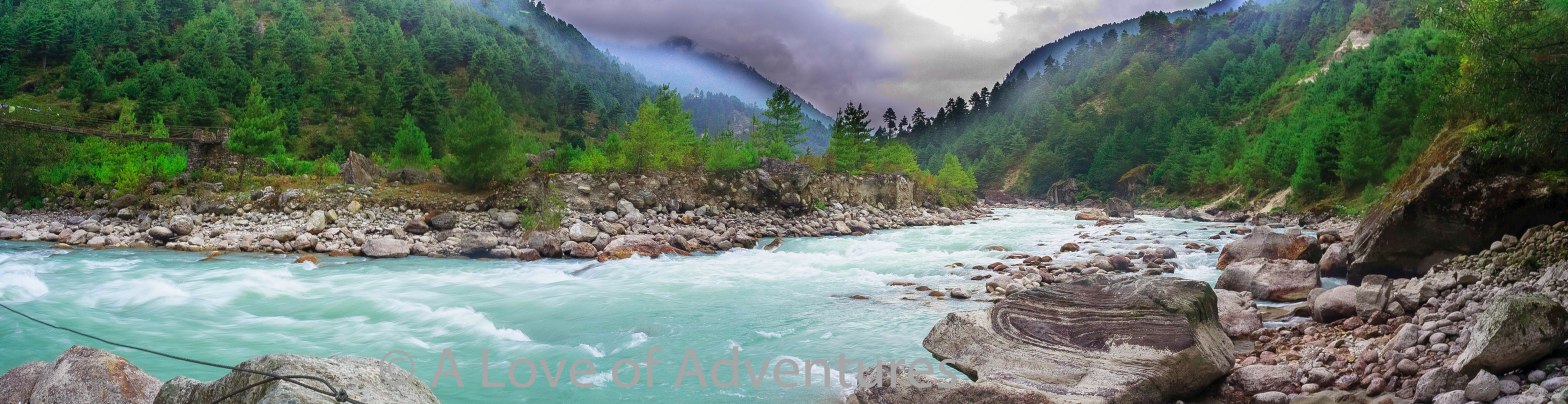
Back in 2012 I finally completed one of those dream trips I had been wanting to do for a very long time. Mt everest base camp and also Island peak.
This is not an easy trek as the altitude alone will stop you dead in your tracks if not fit enough to manage the reduced oxygen levels but I guarantee all the preparations, and all the struggles will be worth it to see and experience such an amazing place.
For this trip I trained on average 4 days a week um in the Gold Coast hinterland doing day hikes. I started small with a light pack over a distance of 5km, and slowly increased the weight and distance until I could do 15-20km hikes with a moderate pack in about 2.5-3 hours. I did them at this pace purely from a fitness perspective rather than just for the enjoyment of the hike itself as I remembered from my New Zealand trip how much the altitude effected me then and did not want to be hindered by that again.
2 weeks before I was due to leave for Nepal I managed to inflame my kneecap on a hike (not good) and after seeing the doctor, the only recommendation was to rest it.
I figured I had spent all this money and done all the training for the trip so I would still be going, sore knee or not and just deal with it. So I rested for the last 2 weeks, packed and repacked more times than I care to admit, and hoped I would be fine when the trekking began.
The day had arrived so It was off to the airport for the flight to Kathmandu via Singapore. The flights were as expected uneventful, filled by sleeping through movies and eating dodgy airline food.
The stopover in Singapore was an experience having never Travelled overseas further then New Zealand before. What a massive terminal, with everything you could want including a cinema and hotel. It was only a 3 hour stopover so i spent the time there just looking around the shops.
On arrival in Kathmandu I was greeted by an unexpected sight, Monkeys in the gardens, around the terminal and even between the planes and the terminal area.
The terminal was just chaos, people everywhere and very little sense of organisation that I could see. Once I found the customs area I was able to get through there fairly quickly as I had organised my visa in Brisbane before departure. The line for those how did not already have a visa looked like it would take hours to get through. Then on to the security screening area where there were people just waving us through straight past the screening machines, I hope they were airport staff as they did not seem to be wearing anything to indicate they worked there.
I made my way out the front attempting to dodge all the people trying to get me a taxi or carry my bags, and thankfully as I got outside I saw someone waving a sign for World expeditions which was the company I had booked with. There must have been people there from at least 30 different tour companies there.
I waited until all the other people arrived before we were all directed to a waiting van to take us to the hotel. getting to the van may seem a simple thing, however this is Kathmandu and due to the amount of vehicles our guides could not get past the other vehicles with our gear, so they simply pushed the nearest car out of the way, loaded our stuff and pushed the car back into its park again.
For anyone who has not travelled in asia or india, travelling by car though Kathmandu (and a lot of asian countries) is a death defying experience in itself. If there are any road rules, no one seems to follow them. To make a right hand turn the driver would just turn into the oncoming traffic and slowly push his way through until clear again. It also seems quite normal to travel down the wrong side of the road to overtake even with multiple lanes of oncoming traffic.

When I was there a lot of road widening was being done, so most roads were either dirt or full of potholes. To widen the roads, the government simply took the fronts off all the buildings to make the roads wide enough, so as we were travelling through Kathmandu we could see straight into peoples houses.
Our accommodation in Kathmandu was at the Radisson which was very nice and very cheap compared to the same standard in most western countries.
That first night everyone on the tour met as a group for the first time for a drink at the bar and then to a nearby traditional restaurant for dinner. The food was excellent with a mix of curries, breads, and rice dishes. Some were a little hot for me but the flavours were just fantastic and the momo’s (dumplings) are awsome. From there it was straight to bed after a long day of travelling.
Day 2 was a relaxing day of sightseeing around Kathmandu. A morning tour took us to both Hindu & Buddhist sites which were both great experiences. First the Shri Pashupatinath Hindu temple situated next to the Bagmati river. By the river are numerous Cremation Pyres and once the bodies and fires are burned to ashes, they are swept into the river to be carried to the next life.


The Temple itself is magnificent, the spire is solid gold and the main door is made of silver. We were unable to enter the temple itself as only Hindu people are permitted.

From there we headed off to the Boudha Stupa. We are told that this Stupa is over 1200 years old and that when it was built, the King commanded that all the water to make the cement was to only be collected from the morning dew and because of this, it took 12 years to build.


All around the Stupa are shops, cafes and galleries. In one to the galleries was a representation of the stupa made with coloured sand by the Dalai lama himself.
After lunch we headed into the shopping district of Thamel to hire our climbing boots and explore. Thamel has street after street of shops full of everything you could think of. Countless souvenir, clothing, and equipment shops. Most of the small clothing and outdoor shops sell poorly made copies of the big name brands but there are larger stores selling the genuine products as well. It was generally fairly easy to tell the fakes by the quality, despite the operators assurances that they were genuine.
Getting back to the hotel across the main road is interesting to say the least. to get across the multiple lanes of traffic you need to just start moving across through the traffic and hope they stop for you. We learned quickly to cross as a group or with some of the locals.
On the way back was one of those sights you just don’t ever forget. Part way back we noticed 2 male police officers in full riot gear walking across the road holding hands. Of course this looked to us very much out to the ordinary, however as we learned during our time in Nepal, holding hands is much more a sign of friendship not romantic relationships.
The third day sees the start of the real adventure. Up at 5.30 for breakfast then onto a bus at 6.30 for the trip to the airport although it turned out there was no need to get there so early as the aircraft that were to take us into the mountains had been stuck at Lukla all night due to poor weather in the mountains.
We finally departed a bit before 10am and what an amazing flight (unless you don’t like flying). Flying at around 12000ft and looking out first at the farmlands and then the ever increasing terrain until we were flying through low passes with 5000 an 6000m mountains towering up around us. Flying through the last few passes the ground was only 100m or so either side of the aircraft.
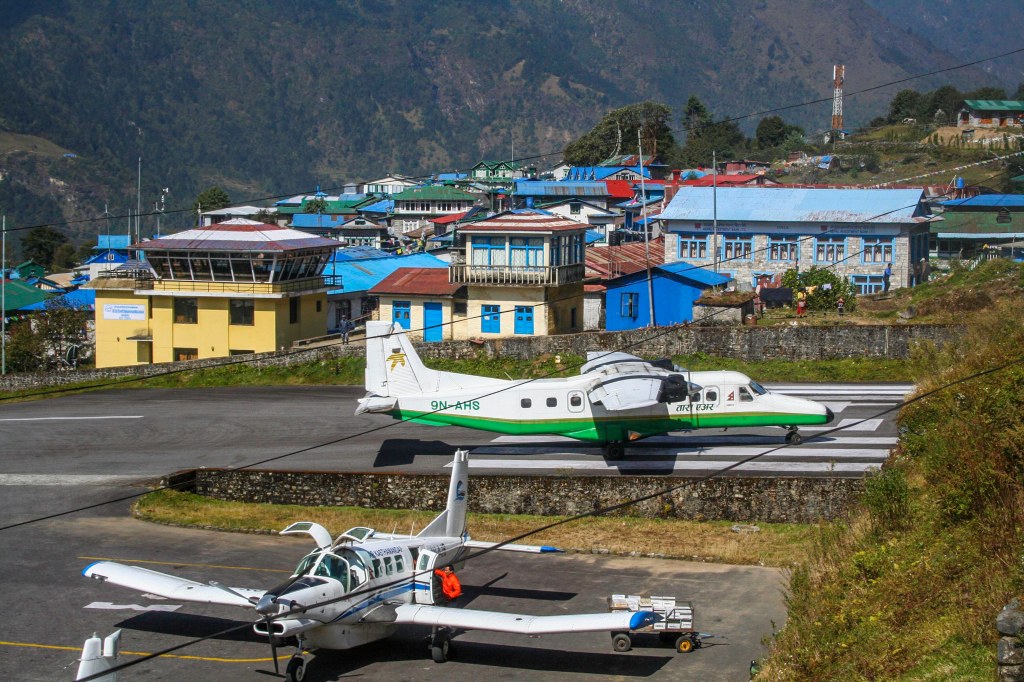
Lukla airport is the one on the top of every dangerous airport show I have ever seen and it looks even steeper in real life. Landing the uphill slope helps to slow down and we turn into the parking area while still slowing so we don’t hit the wall on the end of the runway.

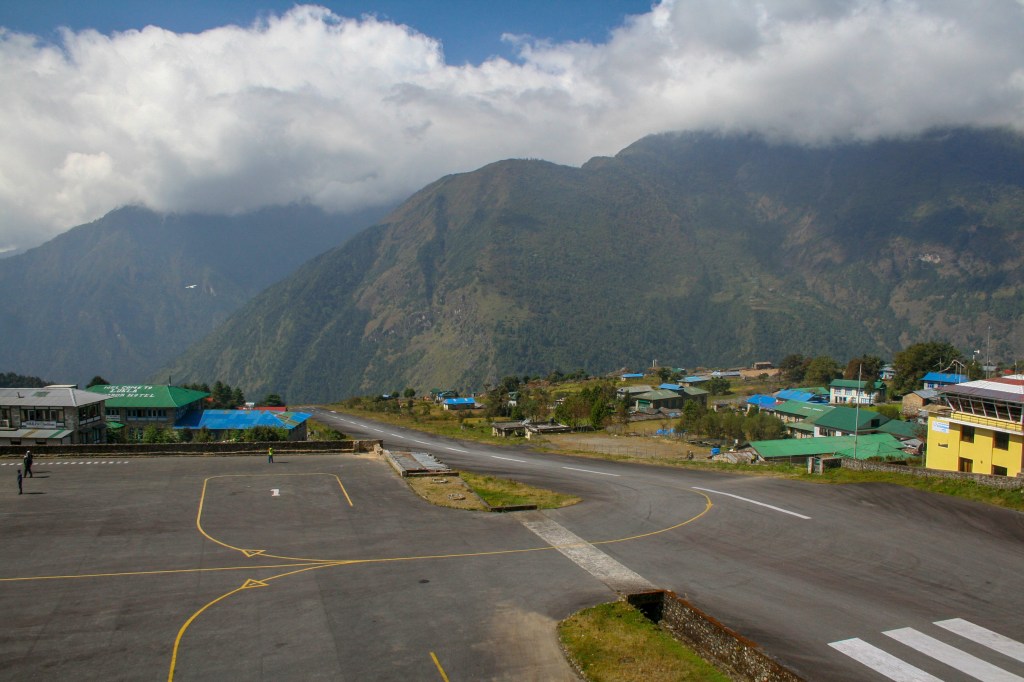
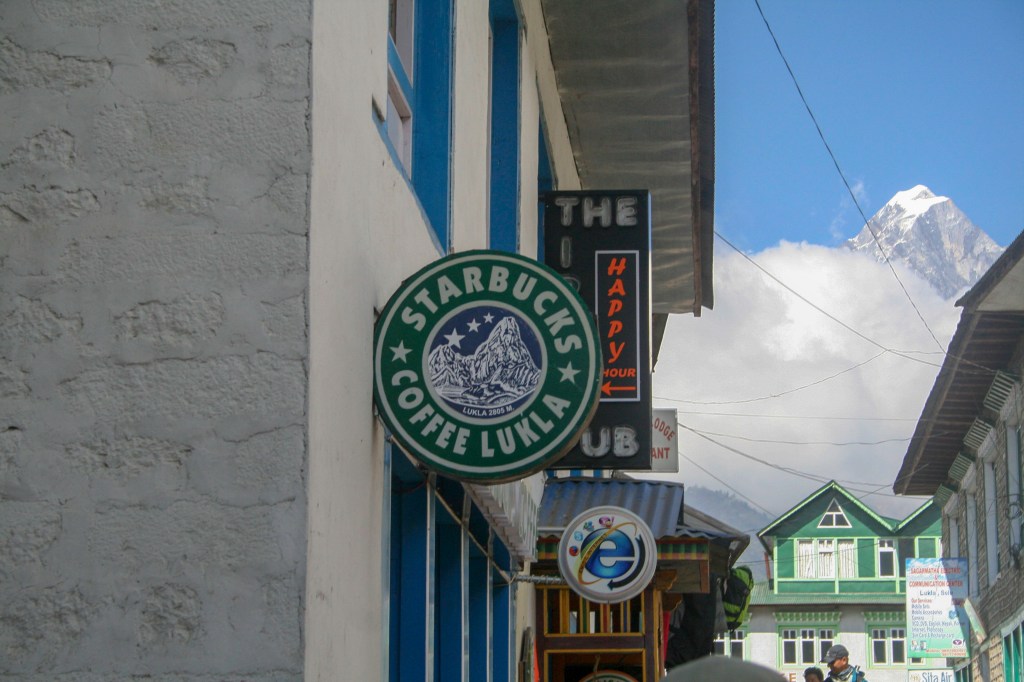
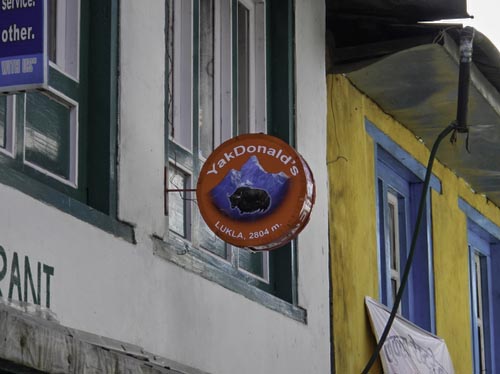
In Lukla we met all our guides and sherpas and had a short amount of time to look around before we were to start the trek. Of all the things you might expect to see and a small mountain town with no road access, an Irish pub and a Starbucks are not among them.
It was a relatively easy start to the trek with a short 2 hour mostly downhill walk to our 1st camp in Ghat. This was one of the permanent campsites we were using which have large tents with foam mattress beds and a stone building used for dining and socialising. In the afternoon I took a small walk down to the Dudh Kosi (milk river) before heading back for afternoon tea and dinner.

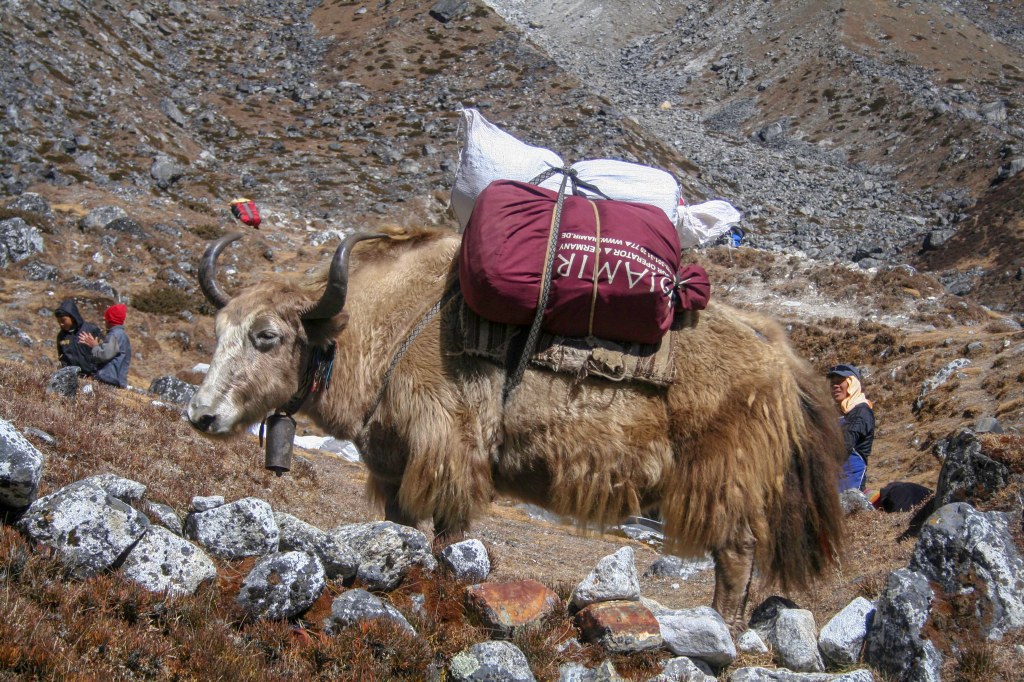
The next morning we were woken at 6.30 by the Sherpas bring us tea in bed and a bowel of warm washing water. After a quick breakfast it was on the trail again towards Monjo. These lower sections of the track are very busy with tourists like us, guides, porters and yaks all moving up and down the track carrying everything from hikers gear to food, timber and other supplies to the villages up the track. Some of the loads are huge and it is just astounding that these people are able to carry such loads at such altitudes and with such apparent ease compared to the struggles we already had not being used to the altitude.
The trail follows the Dudh Kosi along the valley going up and down with the terrain with several crossings of the river. The suspension bridges are made from steel cable and aluminium boards and is the only way across so everything on the track uses them including the Yaks and horses. It was a fairly short day today arriving in Monjo at about 1pm for a late lunch and time to relax and have some hot chocolate at a local café.
The buildings we have at each of the camps for meals are simple but comfortable buildings all with a heater fuelled by Yak dung. Dried Yak dung is used as there is a severe shortage of wood and a lot of deforestation in the area. Ye Yak dung burns very hot and keeps the building nice and warm for us although you do not want to leave the door to the fire open to long as there is quite a smell to the smoke.
Everyone on the trip is appreciative that the first couple of days are a bit easier which is giving us time to acclimatise a little before the bigger days and steeper climbs.
The 5th day of the trip and 3rd on the trail was to be the first big climb day where we would go from Monjo in the valley at 2800m to Namche Bazaar up at 3465m. We started just after 8am and continued along the valley near the river for an hour or so doing up and down with the track. Because of the altitude even now every uphill is hard work as we are still adjusting to the lower oxygen levels.
At the base of the main climb of the day we stopped for a break and could see the very high bridge ahead. (this bridge is no longer used and a new one even higher has replaced it)
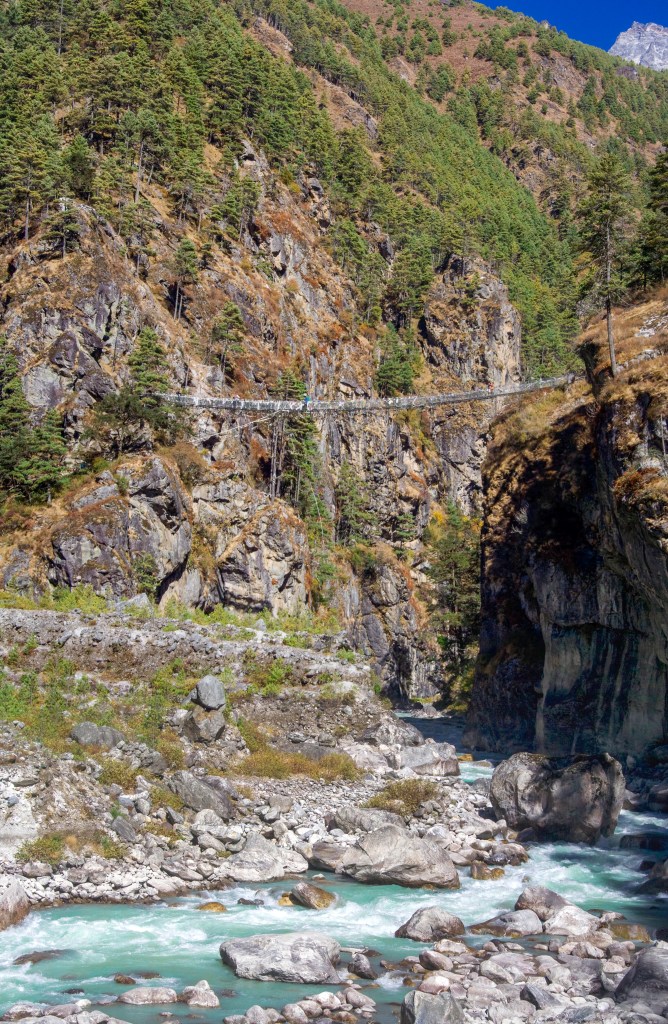
The climb from the river to Namche Bazaar is only just over 3km but is a constant climb of over 600m vertically and it took us about two and a half hours to get to Namche. This was a very hard climb for me as I was really feeling the altitude having no where in Australia anywhere near these heights to practice. About half way up the climb is a rest area which also gives you the 1st view of Mt Everest itself.

Finally reaching Namche Bazaar I thought thank god we are here only to be told our accommodation was “up there” which was sill quite a long way above our current position and at above the town itself. We all pushed on and reached the lodge in time for a late lunch of pasta and grilled spam (yes spam!!!). The afternoon was spent checking out Namche Bazaar and getting supplies (read chocolate). A few of us spent some time in a café as well before heading back to the lodge. The lodge had 1 shower and came at a cost of 400 rupees ($5) but I thought it was worth it given that there likely wouldn’t be the opportunity for another one for a while. The hotel Sherwi where we stayed here also has a Sherpa culture museum which is definitely worth a look, the owner showing us through and explaining many different artefacts used by the Sherpa people now and in the past.

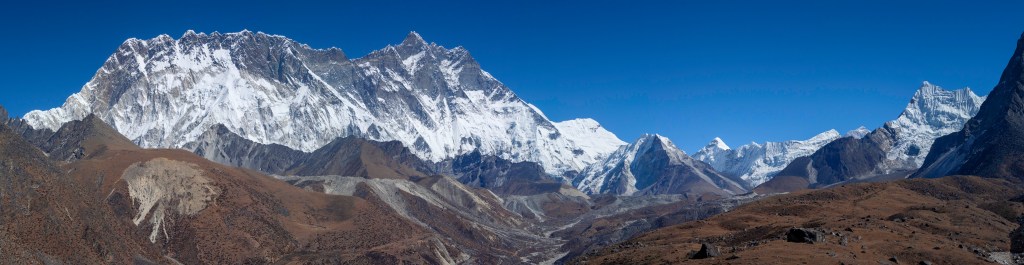
Day 6 was to be a “rest” and acclimatization day. After breakfast we headed out on a walk up to the nearby Everest View Hotel. This is a climb of 400m in altitude and took about an hour and a half to get there. The view towards Everest is breathtaking, looking up the valley you can see Mt Everest, Lhotse, Nuptse, and Ama Dablam.
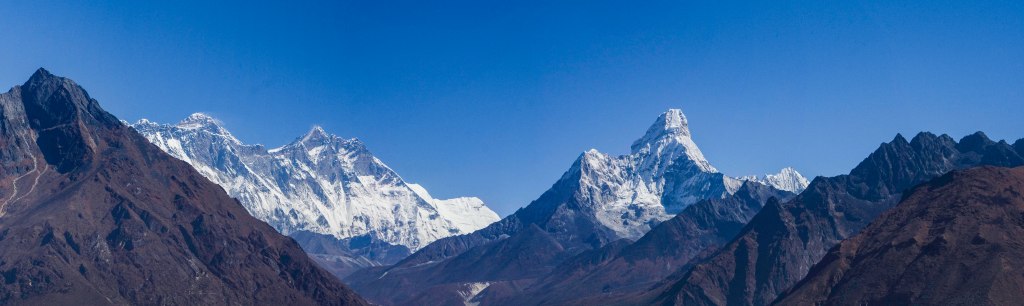

After a coffee, it was back to our lodge in time for lunch and a relaxing afternoon of cards and an early night.
In the morning it was an early start to continue up the track. The first few hours were relatively easy with just small ups and downs and views of Mt Everest and Lhotse ahead of us. As we got closer to the Dudh Kosi we descended through a scenic moss covered pine forest to where lunch was waiting for us by the river and by the time our lunch break was over I had just about fallen asleep.
After waiting for a herd of yaks to cross the bridge over the river, we headed across and started up the long steep climb to the Tengboche Monastery. About 2/3 of the way up the hill it started to snow lightly, a nice light dry snow.
On arrival at the Monastery we were given a tour through some of the areas. I found the tour extremely interesting although chilling on the feet as no shoes are permitted inside.
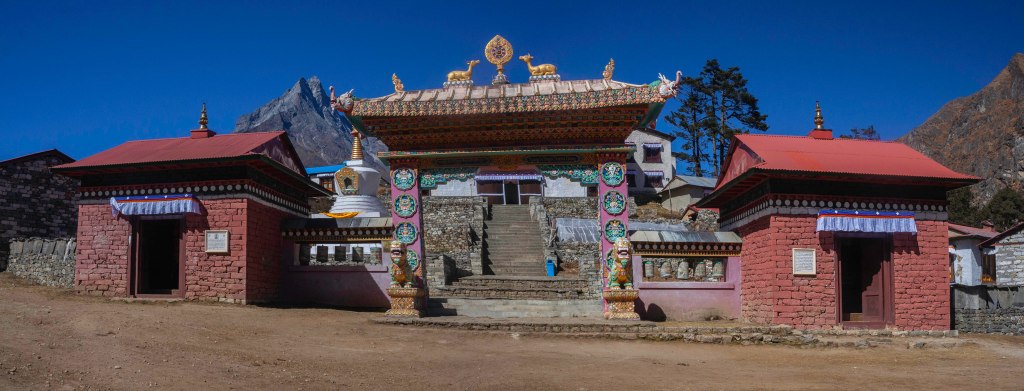

After leaving Tengboche Monastery it was just a short mostly downhill walk to our next camp at Deboche, arriving just in time for afternoon tea.
Apart from the night in Namche Bazaar, washing yourself involves a bowl of warm water which the sherpas bring to your tent and a cloth to give yourself a sponge bath in the tent. Thankfully this day by the time we arrived at camp the snow had stopped falling so it was not quite as cold as it could have been. Today was the first day that it got properly cold during the day and of course I didn’t have an extra warm layer in my day pack so I had to wait til we got to camp to get to the rest of my cloths which the porters carry for you so you are only carrying a light day pack.
Early rises are becoming the norm now and after a breakfast of porridge and pancakes we hit the trail again. The morning was mostly a gentle uphill walk reaching 4000m in altitude just before lunch. The thing you notice as you get higher is the change in vegetation and by 4km above sea level the trees have almost completely stopped growing. Lunch was tuna and vege pasta with a cinnamon scroll for dessert. From there it was a short walk to cross the Dudh Kosi again before the steep climb up to Dingboche began. A steep and rocky track full of switchbacks and plenty of people on their way down having a little chuckle at our struggles coming up.

Our camp at Dingboche sits at just over 4300m altitude and offers amazing views up the valley all the way to Island peak which we are to be climbing in about a weeks time, and after the struggles just to get to this point I was looking up at this mountain and the only thought that came into my head was “what the fuck was I thinking”.
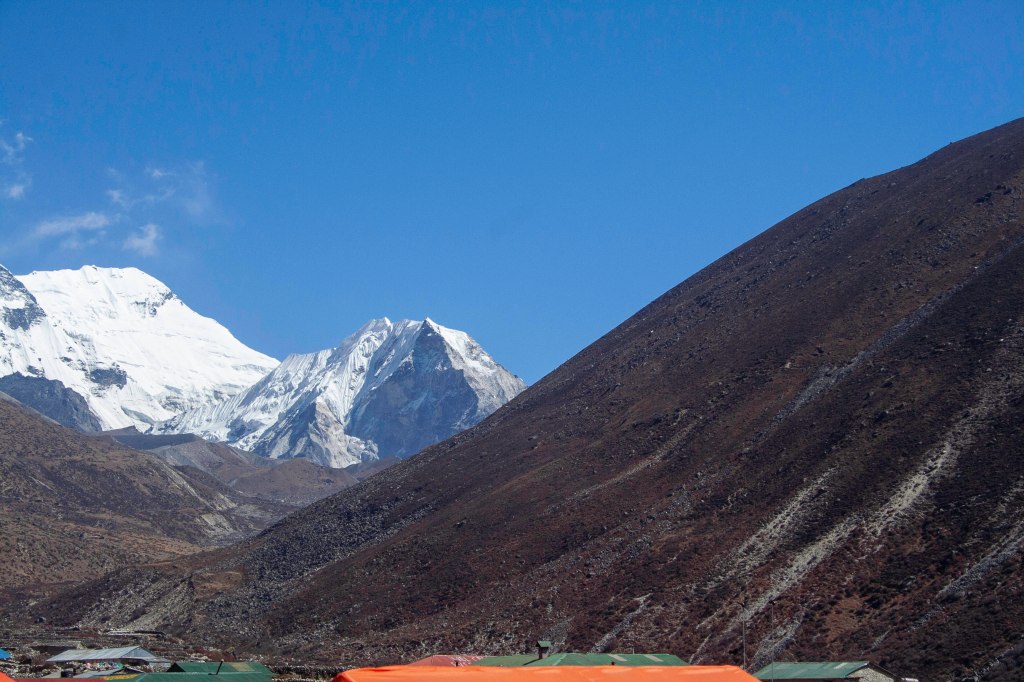
This would also be our last permanent camp until returning to Dingboche on our way back down again.
Day 9 was a rest day in Dingboche and I woke to a crystal clear sky and views forever. After an omelette breakfast, some went for a walk up a nearby hill for some acclimatisation while most including myself stayed in camp and relaxed. About mid morning I went for an explore through the village which is mostly a collection of tea houses and lodges. I came across a “french Bakery” and decided to have a hot chocolate and a snickers roll. They tasted ok and it was nice and warm inside the bakery.
The higher we go, the harder I am finding it to sleep, so after the bakery I took the opportunity for a bit of a nap before lunch, oh and another one after lunch too. Another trick I have learned on this trip is that drinking water bottles work really well as hot water bottles in your sleeping bag. This also has the double effect of still having water to drink in the middle of the night instead of ice.
Time to talk about our guides. Bir Sing was our head guide, a very professional and knowledgeable and friendly guide, whatever he said goes among the guides and porters. Sonam was one of our climbing guides and has a lot of big mountain experience. He is a real character, always having a joke or playing funny tricks. Vishnu was our head sherpa, he worked tirelessly throughout the entire trip bringing us tea in our tents, serving meals, organising washing water, and even brought me back to Dingboche when I got sick before heading back to the rest of the group and bringing several more back when they also got sick. There were also a lot of porters, cooks but we did not see a lot of them as they usually headed off ahead of us to setup the next camp before we arrived. I believe in total there were 28 staff in total for the 10 of us on the trip.
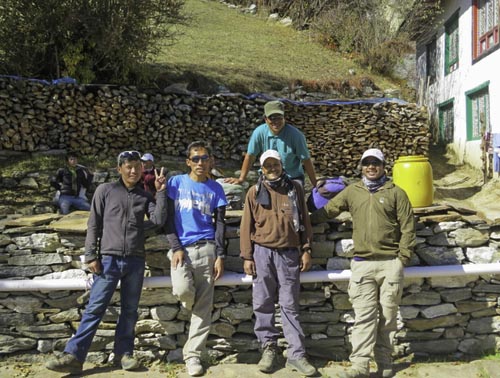
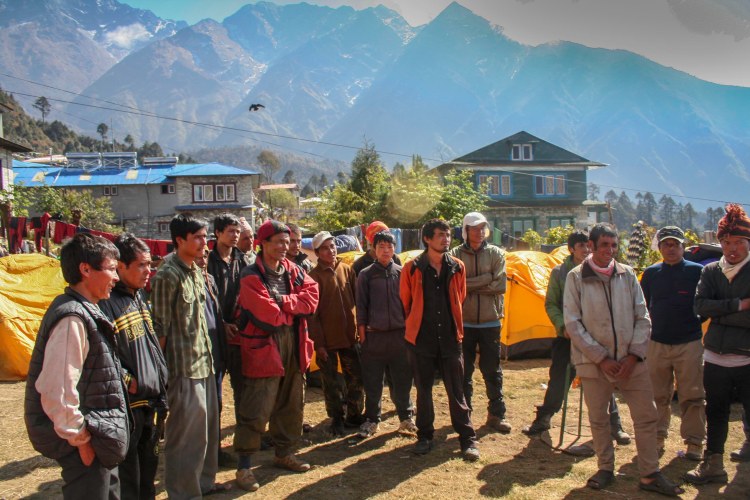
The permanent campsites we have been staying at until now have been great, with large tents and mattresses on frames as well as heated dining halls. Each of these had cushioned seats and a yak dung fueled heater, most also had electricity for lighting as well. But after leaving Dingboche until we return here after Island peak, we will be in dome tents with a large tent for eating.
We left Dingboche on the morning of day 10 and trekked up the side of the valley towards the base of the Kumu glacier before crossing the river and climbing up the other side of the glacier towards the village of Lobuche. Reaching the top of the climb to the left side of the glacier we passed an area of memorials to climbers who had died on Mt everest and other peaks in the area.
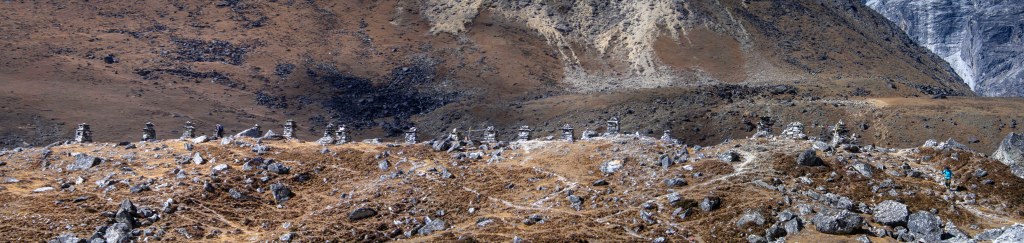

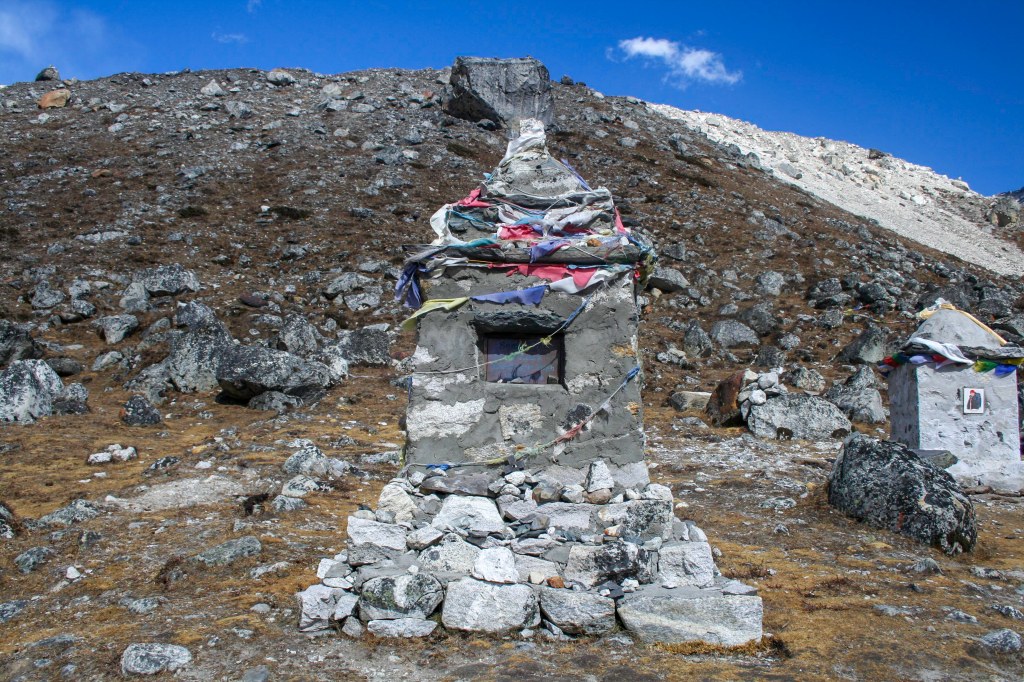
Lobuche is a very small village about halfway up the valley towards Mt Everest base camp and we camped just outside the town. It got down to -12 this night in our tents but tucked up with thermals, hat water in our drinking bottles and a good sleeping bag provided by the tour company, I was nice and warm.
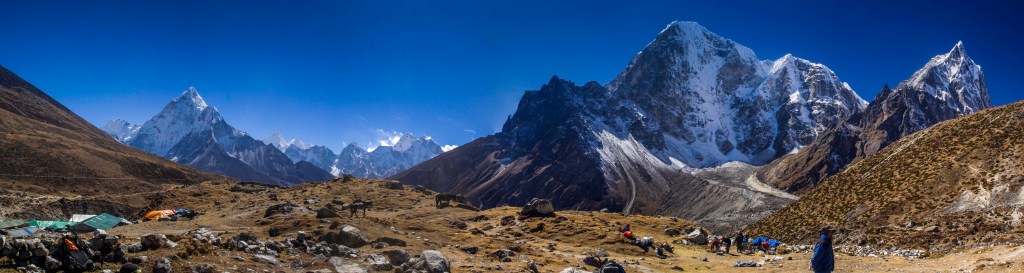
Day 11 is the day. Lobuche to Gorak Shep and Mt Everest base camp. We left camp by 8am and headed up beside the glacier. This was hard work on a mostly 1 land track, twisting through the moraine beside the glacier, climbing up and down, and squeezing past people and yaks. I was really struggling with the combined effects of a bad cold which seemed to be getting worse and the altitude. We reached Gorak Shep about 11.30 for lunch before heading to base camp.
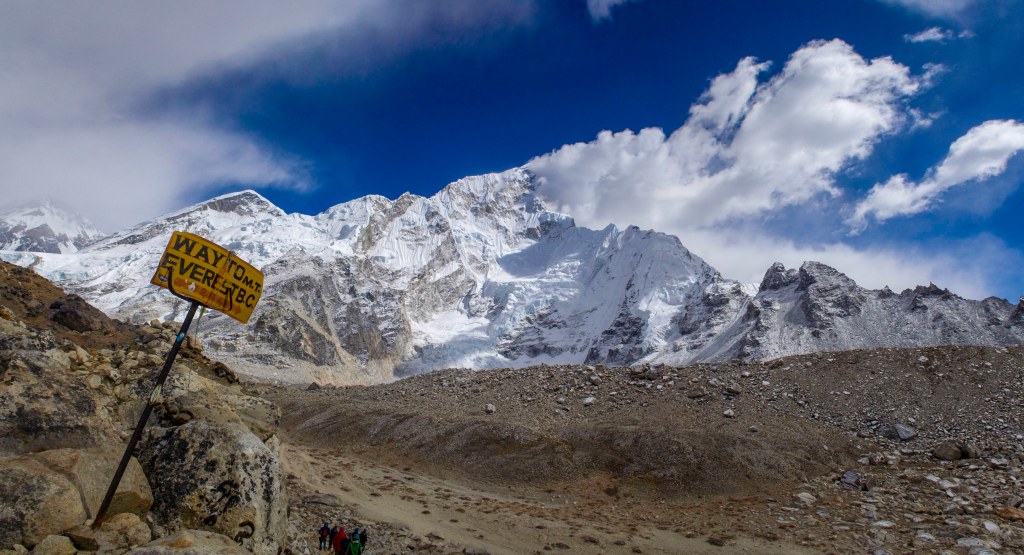
This last stretch was incredibly difficult for me as my cold was making it a lot harder to breath in the thin air and it took 2.5 hours to get from Gorak Shep to Mt Everest base camp at 5345m above sea level. The track was rough and the last part was on the glacier itself which does not look like the nice clean glaciers people imagine, rather is covered in rubble and larger rocks as well as being pitted with crevasses. When I finally made it to base camp it was all worth it. The views are spectacular up the glacier to the Kumbu icefall and Mt Everest peeking out from behind the closer Nuptse. The whole valley is surrounded by these massive mountains towering above you even though we are already standing at well over 5000m above sea level.

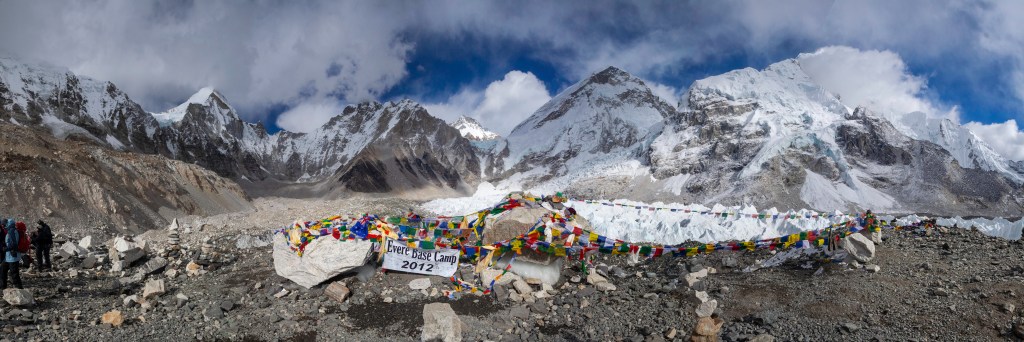
The Kumbu icefall that the climbers must go through looks truly frightening, near vertical in parts, these multi story chunks of ice move slowly down the mountain to join the Kumbu glacier and can topple over without warning.

After a rest and the compulsory photo taking, we headed back to Gorak Shep where we were camping for the night. By this stage I was so buggered that I had to get one of our guided to carry my pack for me. This helped a little and after getting back to camp and having dinner I just passed out in the tent.
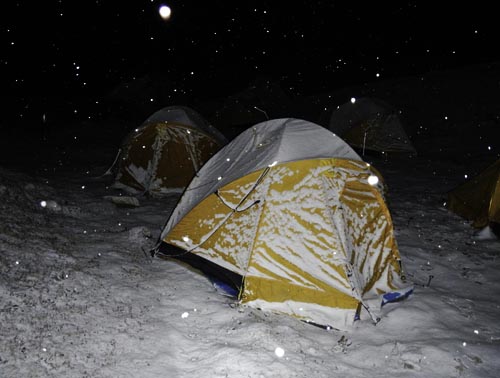
The next morning, most of the group got up early to climb Kala Pattar, a nearby hill that gives excellent views of Mt Everest. As I still not feeling very well, I decided to stay in camp and rest and take a few photos.

While I was at camp I saw 2 helicopters looking for someone further up the valley. At this altitude the helicopters need almost full power to land and can carry very little. Due to the altitude the pilots also have to use oxygen at all times when flying.
After lunch at Gorak Shep we all started heading back towards Lobuche before crossing the glacier to our camp at the base of Kongma La(pass). The trip across the glacier was a real struggle with steep ups and downs on ice, loose rock and dirt. Climbing the short steep sections I was gasping for breath so much it felt like I was suffocating which was making it hard for me to focus clearly. We reached the camp site around 5pm and were greeted with a daunting view looking up to the top of the pass 600m in altitude above us. The climb looked like it went up at a 45 degree angle and was made of shale and loose rock.
After waking in the next morning and feeling no better it was decided that I would head back down to Dingboche and wait there for the rest of the group to return there after climbing Island peak. I wished everyone good luck with the climb and headed back to Dingboche with Vishnu and 1 porter and the next day we would decide if I was feeling well enough to return to the group via a different path. On the way back down I got to see the very start of the Dudh Kosi as it emerged from the Kumbu glacier. After an afternoon rest I was there to greet another group arriving in camp on their way up to base camp. Because the rest of my group and all the support staff were in a different place, I went down to the nearest lodge for diner where I had tuna and yak cheese pizza(different!!!). It actually tasted pretty good.

In the morning I was still feeling pretty bad so I decided to stay in Dingboche while Vishnu and the porter headed back up to the rest of the group. This gave me a really good day of rest which did me the world of good. During the day I also went into town and found a place to have a shower which only cost 350 rupees and well worth it and the floor warmed up once the hot water melted the ice off it.
Dingboche is mostly just a collections of lodges and tea houses and each place seems to have a shop, internet place or bakery in the front as well for anyone passing through to stop at.
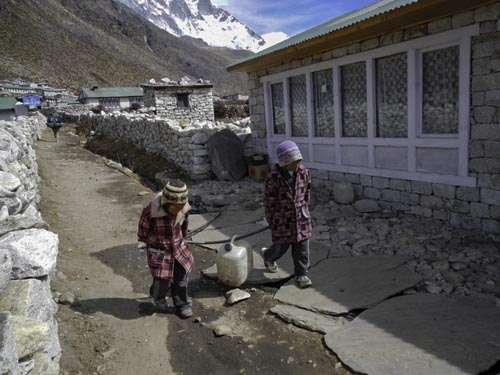
Heading up into the mountains I expected there no phone service or internet anywhere but it turns out the phone reception is better up here than with some providers in major cities in australia and most villages have at least 1 internet cafe. It is funny to see porters carrying these 50-70kg loads up these mountains chatting on their phones like they are just on a leisurely stroll down the street.
The morning of day 15 I was woken by one of the kind lodge staff asking if I would like some tea. I didn’t want any and eventually crawled out of bed and went down to the lodge for an omelette and hot chocolate. After breakfast and a wander through the village, I arrived back at the camp to find a number of bags had turned up for a group. I checked a couple of the tags and it was the gear for some of the others in my group a day earlier than expected. It turned out that a majority of the group had also suffered from illness and 1 injury going over Kongma La and had to come back down, leaving only 3 to attempt the climb of island peak. With most of the group back in Dingboche means my meals will be back in the camp dining room with the group.
Day 16 was another very relaxing day of reading, relaxing and exploring the village. While in the village we got some supplies (chocolate) and stopped at one of the bakeries for coffee and cake before heading back to camp for lunch. In the afternoon we headed back into the village to listen to a talk on ASM (altitude sickness) before dinner and bed. The last few day in Dingboche have helped dramatically and am feeling so much better.
Day 17 was another day of waiting as the 3 remaining group members were not due back from Island peak until tomorrow but since most of us came back to Dingboche early we took the opportunity to do a half day trip up to the nearby Ama Dablam base camp. Before we headed off on the day trip we all met up in the hall for breakfast although due to the effects of the altitude none of us were very hungry and didn’t eat much. We felt sorry for Vishnu who has worked so hard to look after us all, making sure our food is brought to us and is different whenever possible. He looked so upset when most of us hardly ate anything for breakfast.

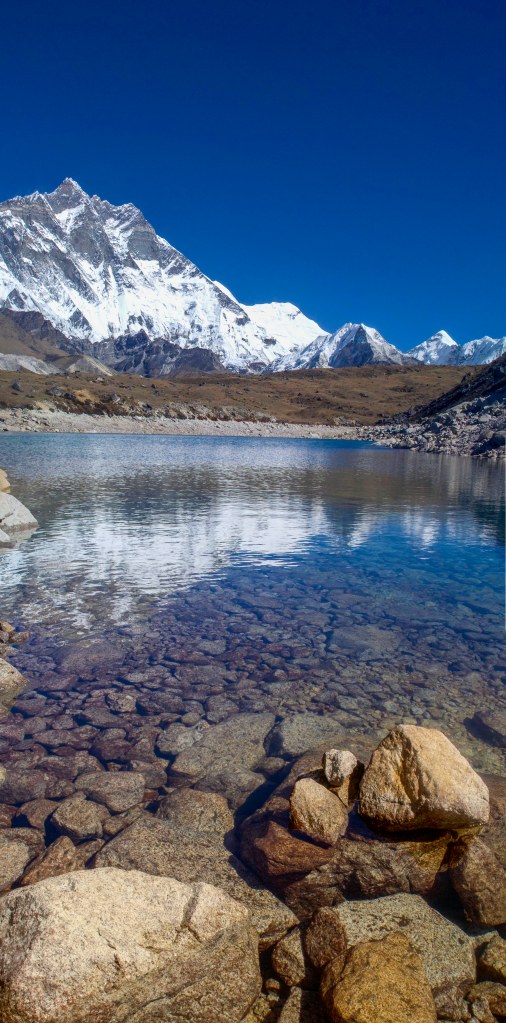
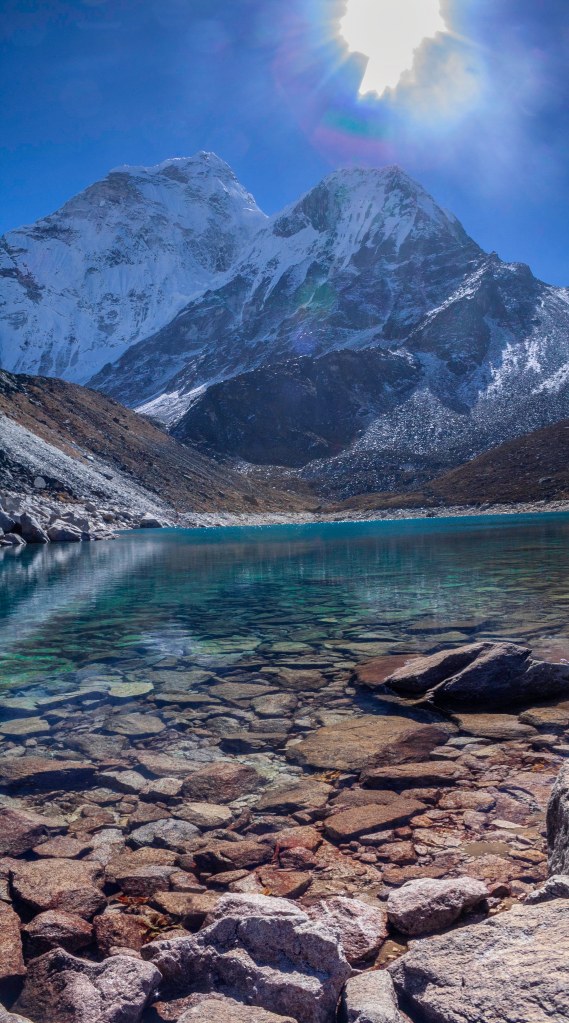
The climb up to Ama Dablam base camp was a very steep but thankfully fairly short climb on the other side of the valley to our camp. The views here are great with perfect views of Ama Dablam, Lotse and Island peak. Even with the steep sections to climb, my breathing was a lot better today thankfully. We explores the area for a bit before heading back to camp for lunch and and afternoon of cards and a lay down in the warm sun soaked tent.
Day 18 and time to start the trek back down from the big mountains. It was a late start for us as we had to wait for the last 3 to join us from Island peak so after packing our gear we all spent the morning sunbaking and trying to spot the others coming back down. They arrived about 12 and we all congratulated them on the achievement as the only 3 of the group to make it up the mountain. After a leisurely lunch we all left Dingboche together for a short downhill walk to Sonare which would be our last night in the dome tents. Over dinner that night the 3 that reached the top of Island peak told us all about the climb and the struggles of going up and down the ropes, trying to pass others going the other way on the very sharp ridges.
Day 19 was a fairly big day from Sonare to Namche Bazaar. It started with some small ups and downs before a steady climb up to Thyangboche Monastery. 2 weeks ago this would have been a much tougher climb but now that we are much more acclimatised it was actually fairly easy. After a few more photos outside the monastery we headed down the big hill to the river and our stop for lunch. While the descent is easy from a fitness perspective it was causing no end of pain for my inflamed kneecap and I found myself relying more and more on my walking poles to take the weight off the knee during the downhill sections. Lunch today was at a tea house next to the Dudh Kosi which is a great spot although all we all wanted to do as a group is get to the lodge in Namche Bazaar which was our destination for the evening. Another climb away from the river after lunch seemed so easy compared to the struggles in the same area on the way thanks to being acclimatised and after a brief stop at a bakery for afternoon tea, we reached the lodge at 4pm. I dropped my bags in the room and headed into town to pick up a few small souvenirs.
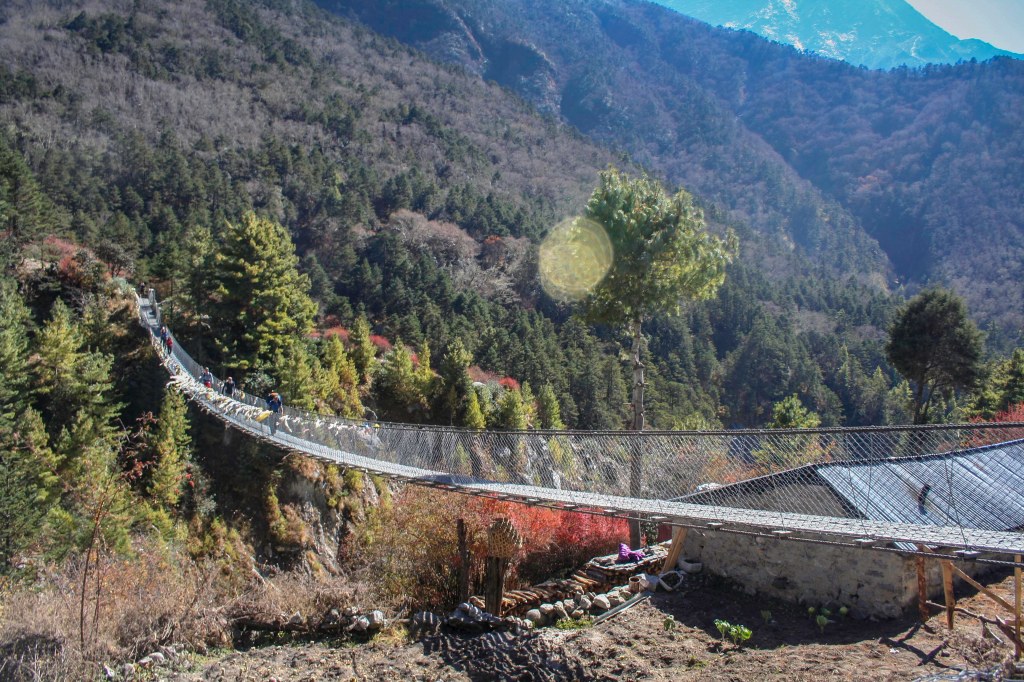
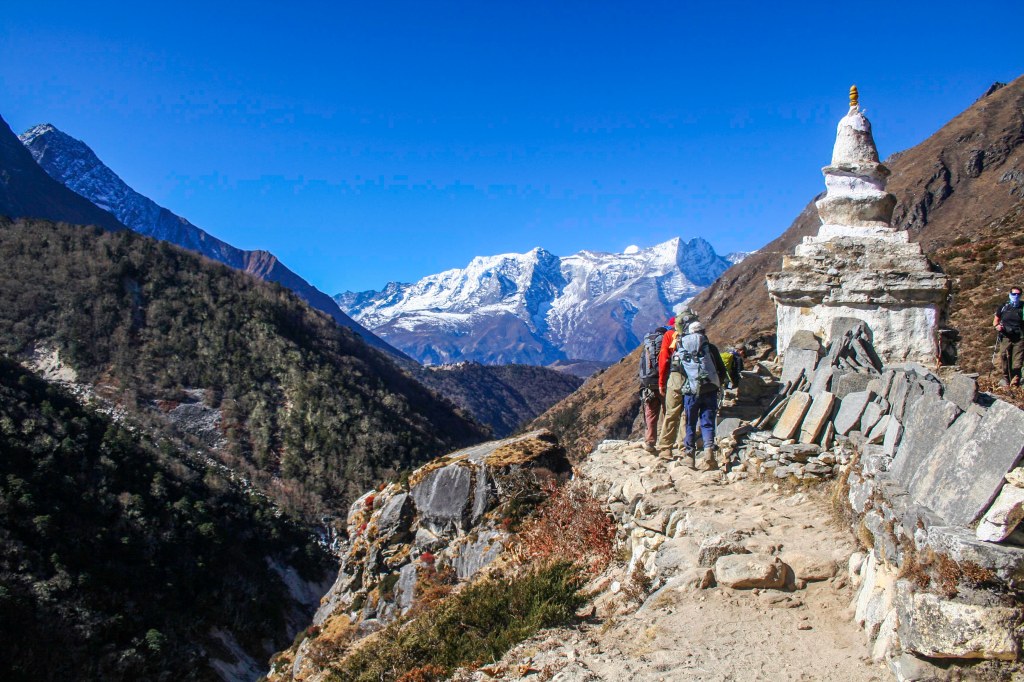
Another early start for our 2nd last day on the track. Up at 6.30 and departed by 8 but not before organising a sweep for the Melbourne cup which was on the same day back home in Australia. Going down the big descent to the valley floor from Namche Bazaar really hurts the knee but I was prepared for it and took some painkillers before departing and that helped immensely. We all moved quickly this morning and before we knew it we were half way down the descent and at the point where we got our 1st and now last view of Mt Everest. Continuing down the hill, across the high bridge over the Dudh Kosi and along the valley beside the river, we arrived at Gaht which was where we stayed on the 1st day at about 3pm.
Day 21 our last day in the mountains. A short 2h walk up to Lukla and I think we all raced up the last little bit once we spotted the archway at the start of the track and headed to where we met the porters at the start of the trek. It felt good to be finished the trekking part of the trip but a little sad at the same time.

After lunch we made our way to the lodge for the night and got excited that they had showers, only to find out shortly after that there was no hot water. Oh well one more day wouldn’t kill us. after finding our rooms and dumping our bags, we all headed back to see our main guides to thank them for everything they had done for us. Vishnu had broken the strap on his pack the day before and one of the ladies on the trip kindly donated her pack to him. A genuine brand name pack would be well beyond what the guides would be able to afford so was a wonderful gesture on her behalf. I gave one of the climbing guides a couple of carabiners that would be useful to him on climbing expeditions in the future. We also all put in some cash that was divided up among all the guides and porters as a thank you for all their hard work. They were all very thankful for the gifts as we were for all they did for us. We said our goodbyes to most of the guides and headed back to the lodge. After dinner we all headed to the Irish pub in Lukla for a a drink or two (yes a very unusual place for an irish pub).

Day 22 was a 5am start so we were packed and ready for the 1st flights out of Lukla to go back to Kathmandu. Our guide headed to the airport and would come and get us when it was time to go (the airport was just across the path from our lodge), Although 10 minutes later he came back in a hurry and told us we had to go now as there was heaps of people there and we had to get checked in and through security. It turned out that there was a lot of extra people there due to a number of flights the day before being cancelled due to poor weather in the areas between Lukla and Kathmandu. Just like Kathmandu airport, Lukla was chaos having to push our way through the crowds to get to the check in and security. Thankfully our tickets were already organised. Once through security we watched the planes arrive in quick succession and no sooner had the stopped, they were loaded with bags and passengers and were taking off again. The whole process taking no longer than 5 minutes. As soon as our plane landed we were ushered out the door and to the plane as the people arriving were still getting off. Before we knew it we were on and the plane taxiing to takeoff again. The takeoff is amazing, Rolling down the runway you really get a perspective of how steep it is looking out the windows and seeing the angle of the buildings compared to the downhill run of the plane. The flight out, just like to one in was a nice scenic flight looking out at the mountains and then farmlands as we got closer to Kathmandu. After collecting our bags we were back at the hotel by 9am.
After a very long shower and shave I went to the bar and got a nice big burger for lunch then spent the rest of the day sorting out gear and getting clothes cleaned before meeting up with everyone for dinner.
Day 23 the last day of the trip. It was a nice relaxing day spent wandering around the area, checking out the many many shops in the touristy shopping district of Thamel before meeting the group and head guide for a celebratory dinner at a restaurant called Rum Doodle in Thamel. It was good to see everyone together for the final time and we took the opportunity to thank Bir Sing our guide for all his efforts.
Day 24. Up and breakfast before one last walk around near the hotel. My flight was in the afternoon so I was able to see some of the others off in the morning as they left for their flights and just relaxed until my checkout at 12pm. The departures area was a lot more organised than when I arrived, and after checking in and going through security I watched the planes (and the monkeys) coming and going until it was time to board for the long flights home. The 1st hour of the flight was good, looking out at the mountains I was trekking through a few days before until they faded into the distance.
This was an absolutely amazing experience of a lifetime that I will never forget. It was incredibly hard work with a pit of pain and suffering, but worth every minute of it. Hopefully I will be able to return one day in the future and take my family with me so they can also experience this truly unique area.
I would like to thank all the staff from World Expeditions who I did the tour with, both in the office who were incredibly helpful with information and advice on preparing for the trip, as well as the local staff who guided us, fed us and carried our gear up and down the mountains. Everyone involved was easy to deal with and made the trip the amazing adventure it was.
 A Love of Adventures